☎ +44 7749 885797
✉ Email: vipul@yield4finance.com ☎ Contact Us

Why Transaction Flow Is Becoming the Core of Global Trade in 2026

In 2026, international trade is not just about connecting buyers and suppliers. It is about how smoothly a transaction moves from one stage to the next. Businesses today are paying closer attention to something that was often overlooked earlier transaction flow. Transaction flow refers to how a deal progresses from initial discussion to final execution. It includes coordination between parties, clarity of steps, and how well each stage connects to the next. As global trade becomes more structured, businesses are realising that a strong transaction flow makes trade easier to manage and scale. This is where Yield 4 Finance fits into modern trade conversations, supporting businesses that want their transactions to move with more clarity and better alignment.  

What Is Transaction Flow in Trade?

  Transaction flow is the sequence of steps that a trade deal follows. It defines how information moves, how decisions are made, and how different parties stay aligned during the process. A well-defined flow allows businesses to:
  • Understand what comes next
  • Coordinate better with counterparties
  • Reduce unnecessary back-and-forth
  • Maintain steady progress
In 2026, this flow is becoming more important because trade is no longer linear. It involves multiple checkpoints, systems, and levels of coordination.  

Why Transaction Flow Matters More today

  Global trade is now faster, but also more detailed. Businesses are dealing with:
  • Multiple jurisdictions
  • Structured documentation requirements
  • Internal and external coordination
  • Higher expectations around clarity
In this environment, the way a deal flows becomes critical. Even strong opportunities can feel slow if the flow is not clear. A smooth transaction flow helps businesses stay organised and move forward with confidence.  

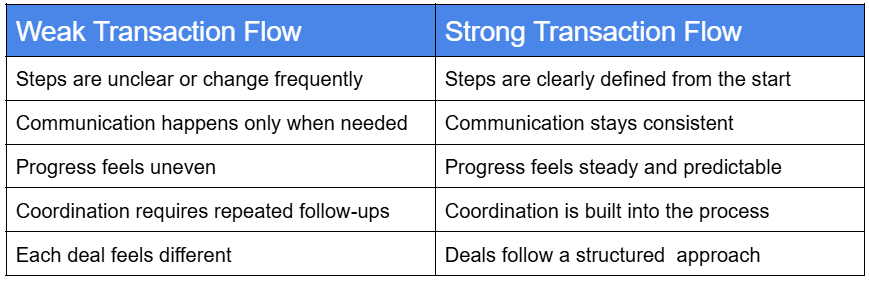
Comparing Strong and Weak Transaction Flow

  The difference between a well-managed transaction and a difficult one often comes down to how the flow is designed.   Comparing Strong and Weak Transaction Flow  
How Structured Trade Support Improves Flow

Transaction flow becomes stronger when the deal is supported by a structured framework. This is where trade finance solutions like DLC, SBLC, and BG play an important role. These tools help bring order into the transaction by defining how different parts of the deal are connected to each other. When aligned properly, they improve how information moves and how parties stay coordinated. Yield 4 Finance works with businesses to ensure that these solutions are integrated into transactions in a way that supports smooth progression rather than creating complexity.  

Why Import-Focused Businesses Focus on Flow

Import-driven businesses often manage multiple transactions at the same time. They deal with suppliers, timelines, and internal planning cycles. For them, transaction flow is critical.   When the flow is clear:
  • Planning becomes easier
  • Coordination improves
  • Teams work more efficiently
  • Growth becomes more manageable
Yield 4 Finance supports these businesses by helping them build transaction flows that are structured, repeatable, and aligned with their trade process.  

From Individual Deals to System-Oriented Trade

In 2026, successful businesses are moving away from handling each deal separately. Instead, they are now building systems that support multiple transactions. Transaction flow is a key part of this shift. When businesses create a clear flow, they can use it again and again, making trade more scalable. Yield 4 Finance aligns with this approach by supporting businesses that want to move from one-time deals to structured trade processes.  

Final Thought

In modern international trade, success is no longer just about opportunity. It is about how efficiently that opportunity moves forward. Transaction flow is becoming the backbone of global trade operations. It connects every stage of the deal and ensures that progress remains steady. As trade continues to evolve in 2026, businesses that focus on flow will find it easier to manage complexity and expand globally. This is where Yield 4 Finance continues to contribute, helping businesses bring clarity, structure, and better movement into their international transactions.