
The Difference Between Speed and Timing
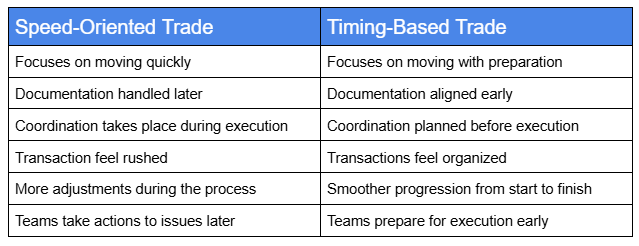
Many businesses confuse speed with efficiency. However, in international trade, they are not the same thing. Speed simply means moving fast. Timing means moving at the right stage with proper preparation already in place. Let’s take an example like a deal may move quickly in the beginning because both parties are willing to proceed with the deal. But if documentation is incomplete, transaction flow is not clear, or coordination between parties is not established well, the deal may slow down later. This creates repeated adjustments during execution. Good timing works differently. It focuses on preparing the transaction properly before movement begins. This includes:- Aligning documentation at early stage
- Explaining the transaction flow clearly
- Coordinating with all the involved parties
- Structuring financial elements at the right stage
Why Timing Has Become More Important in 2026
International trade today is far more connected and process-oriented than before. Businesses are no longer dealing with simple on step-transactions. Modern trade often includes:- Multiple countries and suppliers
- Internal review processes
- Cross-border coordination
- Details and documents requirements
- Structured financial arrangements
How Poor Timing Affects Trade Transactions
When transactions move early without proper preparation, businesses often face operational challenges during execution. Some common effects include:- Documentation needing repeated updates
- Communication gaps between parties
- Delays in transaction coordination
- Difficulty tracking the next stage of the process
- Increased pressure on internal teams
 The goal is not slower trade.
The goal is a smarter and more organized trade movement.
The goal is not slower trade.
The goal is a smarter and more organized trade movement.
Why Import-Focused Businesses Prioritize Timing
Import-focused businesses usually handle multiple activities at the same time. They coordinate with suppliers, manage sourcing timelines, arrange logistics, and align internal operations. In an environment like this, timing becomes very important. When timing is managed properly:- Suppliers get clear and straight direction
- Internal teams stay coordinated
- Transactions become easier to track
- Trade operations become more expandable
The Role of Structured Trade Support
Financial structuring also plays a very important and major role in transaction timing. Instruments like SBLC, DLC, and BG are commonly used in international trade to help create a more organised transaction framework. When these elements are introduced at the right stage of the transaction, they support:- Better coordination between parties
- Clearer transaction flow
- Improved visibility across the deal
- More structured execution planning
Timing as a Long-Term Business Advantage
In 2026, businesses are no longer thinking only about completing individual deals. They are focusing on building systems that support long-term trade growth. Good timing helps businesses create:- Repeatable transaction processes
- Better internal coordination
- More predictable execution
- Stronger operational consistency